Evolution of Demand Management – The Past and The Future
Jayaprakash Nair
December 5, 2024
2 minutes read
Share
From Spreadsheets to ERP: The Digital Transformation of Demand Management
Having an exact plan in place to manage customer demand is a dream for any business. The overall goal of demand management is to plan for sufficient stock and create awareness among customers to purchase the stock once it is available. Let’s look at how demand management as a practice has evolved through the decades.
It is believed that serious attempts to digitize demand management started way back in the 1980s when the spreadsheet was first invented, and it got a lift-off after the introduction of Microsoft Excel. Many organizations are still using Microsoft Excel as a tool for demand planning.
It progressed to the next stage when ERP vendors like SAP labs and Oracle started offering demand management services that included statistical forecasting in the early 1990’s. It was followed by the Advanced Planning and Solution (APS) vendors coming out with their solutions for demand management.
Re-imagining Demand Management in the Digital Age
However, changes in the new millennium, like the emergence of social media, have changed the way businesses operate irreversibly. It has become imperative for an organization to have a presence in social media, for both demand ‘listening’ as well as demand ‘generation’. Several social and technology paradigms like this have led to a need to track, quantify, and use all these demand influencers in the overall demand management faculty. Traditional univariate demand forecast — i.e., taking the historical demand figures and extrapolating them into the future — has proven to be inadequate, albeit widely used still.
The traditional approaches leave several questions unanswered, in the demand planners mind — What factors influence my product’s demand? How much does each factor influence demand (they can’t all have equal weightage)? Can I tune any factors to generate more demand? How do I forecast the demand in an uncertain economic climate? How do I forecast demand for a new product? And so on.
AI and ML in Demand Management: Future or Reality?
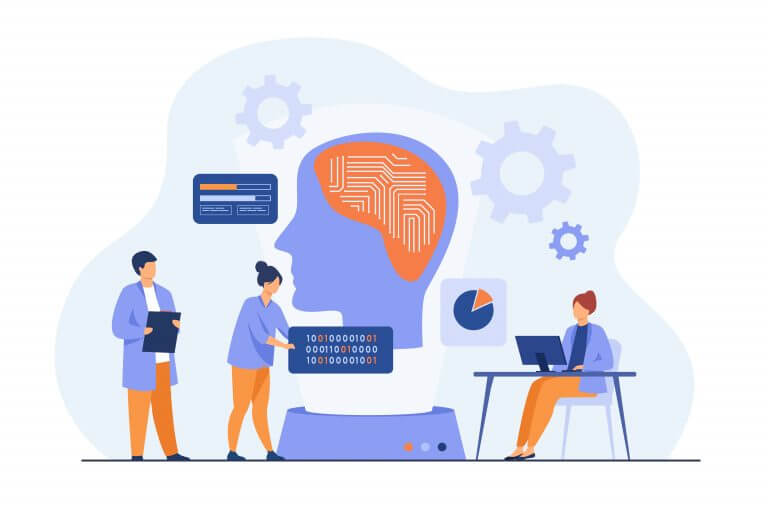
A better treatment of demand management involves leveraging artificial intelligence (AI) and machine learning (ML), to generate a more transparent view into how the various factors influence demand, instead of just a black box demand forecast. Is that in the future or is it here now?
Altimetrik is committed to protecting your personal information. To apply for a position, you will need to provide your email address and create a login. Your information will be used in accordance with applicable data privacy laws, our Privacy Policy, and our Privacy Notice.